Best Yarn for Granny Squares: Fiber and Weight by Project
Acrylic, cotton, wool or a blend? How to choose the fiber, weight, ply and colors for granny squares based on what you plan to make.
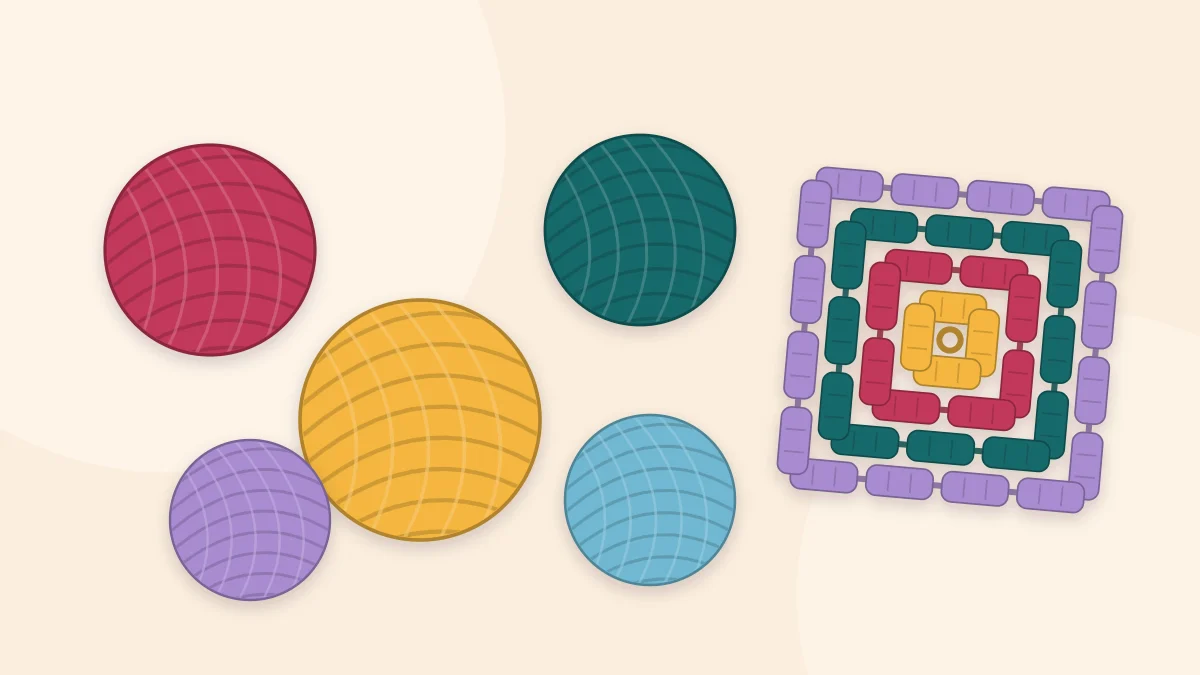
For most granny squares, a smooth, plied, worsted weight (4) yarn in acrylic or an acrylic blend is the easiest place to start: the stitches are easy to see, the yarn is widely available in many colors, and it usually tolerates machine washing. That is a starting point rather than a rule. The best yarn depends on what the squares will become, because a coaster, a baby blanket and a cardigan ask very different things of the same stitch.
Choose the Fiber for the Job
Acrylic
Acrylic is light, affordable and sold in a wide color range, which matters when a blanket needs six or eight shades. Most acrylic yarns are labeled machine washable, so they suit blankets, cushions and anything for children. The trade-offs: acrylic does not absorb water well, it can melt under direct heat, and it does not hold a blocked shape as firmly as wool unless it is steamed with care.
Cotton
Cotton gives crisp, well-defined stitches and absorbs water, so it is the usual choice for coasters, dishcloths, bags and warm-weather tops. It has very little stretch. That keeps a bag from sagging as quickly, but it also makes cotton less forgiving on the hands and heavier in a large blanket. Mercerized cotton has a smoother, slightly shiny surface; unmercerized cotton is softer and more matte.
Wool
Wool is warm, elastic and blocks beautifully: a wet wool square can be pinned to an exact size and will usually hold it. Ordinary wool can felt and shrink if it is machine washed, so look for the word “superwash” on the label if the finished piece needs easy care. Some people find wool itchy, which is worth thinking about for a gift.
Blends
Blends aim for the best of two fibers. Cotton and acrylic is lighter and softer than pure cotton. Wool and acrylic adds warmth and spring while keeping the price and care simple. Always read the label, because a blend takes on the care needs of its most delicate fiber.
Watch out
Care advice here is general. The care symbols on the yarn label are the instructions to follow, and a washed test square is the only way to know how a particular yarn behaves.
Pick a Weight That Matches the Project
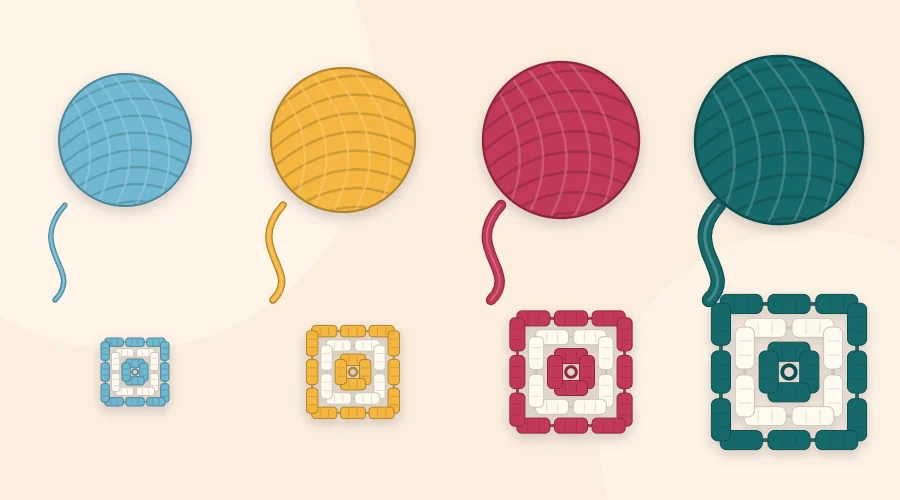
Yarn weight means thickness, not how heavy the ball is. The Craft Yarn Council’s standard yarn weight system sorts yarn into numbered categories from 0 to 7, and most labels print the number inside a small yarn-ball symbol. Thicker yarn makes a bigger square from the same number of rounds.
| CYC Number | Category | Common Names | Good For |
|---|---|---|---|
| 1 | Super fine | Sock, fingering, baby | Delicate motifs, lightweight shawls |
| 2 | Fine | Sport, baby | Baby items, drapey garments |
| 3 | Light | DK, light worsted | Cardigans, scarves, lighter blankets |
| 4 | Medium | Worsted, afghan, aran | Blankets, pillows, bags, first squares |
| 5 | Bulky | Chunky, craft, rug | Fast, thick blankets and rugs |
| 6 | Super bulky | Super bulky, roving | Very quick, heavy throws |
Lace (0) and jumbo (7) sit at either end of the scale and are rarely used for granny squares. Whatever weight you choose, match it with a suitable hook; the crochet hook size guide has the standard ranges.
Best Yarn by Project
- Blankets: worsted weight (4) acrylic or a wool-acrylic blend for warmth and easy washing; DK (3) for a lighter, more flexible blanket. Planning help is in the granny square blanket guide.
- Baby blankets: a soft, machine-washable yarn in fine (2), light (3) or medium (4) weight. Avoid fuzzy yarns that shed.
- Garments: light (3) or fine (2) yarn in cotton blends, wool or other fibers that drape. Stiff, thick squares make a boxy, heavy granny square cardigan.
- Bags: cotton or a cotton blend in medium (4) weight, worked firmly so the fabric stretches less.
- Coasters and kitchen items: 100% cotton, because it absorbs moisture and copes with heat better than acrylic.
- Scarves: soft wool, wool blends or light acrylic with good drape, since the fabric sits against the neck.
Ply, Twist and Texture
Look at the strand itself. A yarn made of several plies twisted firmly together is round and smooth, shows each double crochet (dc) clearly and is less likely to split when the hook goes in. Loosely twisted or single-ply yarns are soft but split and pill more easily, which can be frustrating in the chain spaces of a granny square.
Fuzzy, bouclé and heavily textured novelty yarns hide the stitches. That makes it hard to find the corner spaces and nearly impossible to rip back cleanly, so they are a poor choice for a first square. Save them for a border or a single accent round.
Color Choices That Work in Squares
- Solid colors show the structure of the square best and make color-per-round designs look crisp.
- A neutral joining color such as cream, gray or black ties many bright squares together.
- Variegated and self-striping yarns change color on their own. In small squares the color runs are short and can look speckled; in a giant single square they form bands.
- Very dark yarn hides stitches, so avoid black or navy while learning.
- Dye lots vary. Buy enough of each color at once and check that the lot numbers on the labels match.
Multi-color squares mean more tails to secure, and slippery fibers such as mercerized cotton need longer, more carefully woven ends than grippy wool. The method is covered in how to weave in ends on granny squares.
Tip
Keep every yarn in one project the same weight and, ideally, the same fiber. Squares made from mixed yarns come out in different sizes and may react differently to washing.
How Much Yarn to Buy
Yardage per square depends on the yarn, the hook, the number of rounds and your tension, so no single figure fits everyone. The reliable method is to make one complete square, then unravel it and measure the yarn used, or weigh the square on a kitchen scale and compare that with the weight and yardage printed on the label. Multiply by the number of squares and add extra for joining, the border and a margin of safety.
Frequently asked questions
What yarn is best for a beginner granny square?
A smooth, plied, light-colored worsted weight (4) yarn is the usual recommendation, because the stitches and spaces are easy to see. Acrylic or an acrylic blend keeps the cost low while practicing.
Is cotton or acrylic better for granny squares?
It depends on the project. Cotton suits coasters, bags and kitchen items because it is absorbent and holds its shape, while acrylic is lighter and softer for blankets and usually easier to wash.
Can you mix different yarns in one granny square project?
It is safest to keep the same weight and fiber throughout. Different yarns produce different square sizes and can shrink or stretch differently when washed.
How much yarn does one granny square use?
It varies with the yarn, hook, number of rounds and tension. Make one square, then unravel and measure it or weigh it, and multiply by the number of squares you need.